


December 16, 2016 - 4:00 pm
Max Tegmark, Josh Tenenbaum, Tomaso Poggio
November 4, 2016 - 4:00 pm
Ilker Yildirim (CBMM, MIT), Goker Erdogan (U. Rochester); followed by a discussion with Josh Tenenbaum and...
Generative models and deep networks in brain/mind modeling (two 25 min talks + discussion/debate to follow).

October 21, 2016 - 4:00 pm
Alan Yuille (CBMM, Johns Hopkins University)
Abstract: This talk describes work on detecting and parsing humans into joints and semantic parts. It combines deep networks with graphical models for reasoning about the spatial relations between joints. We discuss methods for dealing with occlusion and scale variations. Finally we describe...
October 7, 2016 - 4:00 pm
Pedro Tsividis and Josh Tenenbaum
NOTE - *Please bring a laptop, as this will be a participatory session. We will actually be playing video games for much of it. We encourage everyone to bring their laptop and actively participate.*
September 16, 2016 - 4:00 pm
Tomaso Poggio
Topic: CBMM state and updates
- State of CBMM (Tomaso Poggio)
- BMM summer school recap (Gemma Roig)
- Engineering of Intelligence Teams (Greg Hale)
- Technology and resources for CBMM (Kris Brewer)
- NSF renewal proposal updates (Kathleen Sullivan)
- Upcoming meetings
- State of CBMM (Tomaso Poggio)
- BMM summer school recap (Gemma Roig)
- Engineering of Intelligence Teams (Greg Hale)
- Technology and resources for CBMM (Kris Brewer)
- NSF renewal proposal updates (Kathleen Sullivan)
- Upcoming meetings
May 11, 2016 - 4:00 pm
Harvard NW Bldg. Room 243
CBMM postdocs will lead a discussion on Object detection performance

May 4, 2016 - 4:00 pm
McGovern Reading Room (45-5165)
Speaker: Robert Gütig (Max Planck Institute of Experimental Biology, Goettingen)
Robert Gütig is a group leader at the Max Planck Institute of Experimental Biology in Goettingen where he researches spike-based learning and information processing in neural networks. He was trained in Physics at the Free University of Berlin (Germany) and the University of Cambridge (UK). He did...
April 13, 2016 - 4:00 pm
McGovern Reading Room, MIT 46-5165
Dr. Erik Blaser, Dr. Marc Pomplun, Dr. Jin Ho Park, UMass Boston
Abstract: Dr. Blaser (Psychology) and Dr. Pomplun (Computer Science) will give an introduction to ongoing research both in their labs, and more broadly at the University of Massachusetts Boston. Dr. Blaser’s area is visual psychophysics (including work on visual attention and ocular dominance...
April 6, 2016 - 4:00 pm
Moderator: Max Tegmark
Panelists: Adam Marblestone, Boris Katz, Josh Tenenbaum, Gabriel Kreiman, Seth Lloyd...
Main topic: What similarities/differences should we expect between the brain and AI-systems?
On one hand, one might expect evolution and engineering to discover similar solutions to similar computational problems. On the other hand, the two are optimizing under very different constraints: evolution...
On one hand, one might expect evolution and engineering to discover similar solutions to similar computational problems. On the other hand, the two are optimizing under very different constraints: evolution...

March 30, 2016 - 4:00 pm
Harvard NW Bldg. Room 243
L. Mahadevan, SEAS, Physics and OEB, Harvard University
Abstract: Geometry is typically associated with simultaneous processing of the relationship between objects, while probability is typically associated with the sequential processing of events. I will discuss some of our preliminary work on combining these subjects in two contexts: (i)...

March 9, 2016 - 4:00 pm
Harvard NW Bldg.
Patrick Winston
Abstract:
I describe the Genesis story understanding system, and I explain why I believe Genesis sheds light on aspects of intelligence that are uniquely human. I show how Genesis exhibits aspects of common sense reasoning, conceptual understanding, cultural bias, hypothetical reflection, mental-...
I describe the Genesis story understanding system, and I explain why I believe Genesis sheds light on aspects of intelligence that are uniquely human. I show how Genesis exhibits aspects of common sense reasoning, conceptual understanding, cultural bias, hypothetical reflection, mental-...

March 2, 2016 - 4:00 pm
MIT Bldg. 46 Room 5165
Jeremy M Wolfe, PhD
Professor of Ophthalmology & Radiology, Harvard Medical School
Director -Visual...
Abstract: In a typical visual search task, you look for a target object amongst some non-target, distractor objects. In the real world, however, you often look for more than one thing at one time. In the supermarket, you might be holding a shopping list of 10 items in your memory. We will call this...

February 17, 2016 - 4:00 pm
MIT Building 46, Room 3189
Haim Sompolinsky
Abstract: What are the computational principles underlying the transformation of sensory representations along brain sensory hierarchies? I will discuss recent theoretical results addressing: (1) the role of sparsity, expansion and noise in signal propagation in deep networks; (2) the potential...
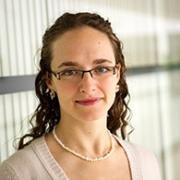
February 3, 2016 - 4:00 pm
Rebecca Saxe
In healthy human adults, cortical representations of the visual world are spatially and functionally organized at multiple scales. High level, behaviourally relevant categories (e.g. faces, scenes) elicit systematic responses across wide regions of cortex. While the adult state has been described...

January 27, 2016 - 4:00 pm
Nancy Kanwisher
Thrust 4 Projects
Speakers: Prof. Nancy Kanwisher - Introduction; Matt Peterson - "Real World Eye Movements for Acquiring Social Information"; Maryam Vaziri Pashkam - "Understanding action reading and social vision from simple interactions"; Leyla Isik - "Studying social interactions with...
Speakers: Prof. Nancy Kanwisher - Introduction; Matt Peterson - "Real World Eye Movements for Acquiring Social Information"; Maryam Vaziri Pashkam - "Understanding action reading and social vision from simple interactions"; Leyla Isik - "Studying social interactions with...