Talks

CANCELED: CBMM Brains, Minds, and Machines Seminar Series: Mapping Responses in the Human Brain Through Space and Time

Mar 30, 2021 - 4:00 pm
Photo of Prof. Aude Oliva
Venue:  Hosted via Zoom Speaker/s:  Prof. Aude Oliva, Senior Research Scientist, CSAIL; MIT Director MIT-IBM Watson AI Lab; Director MIT Quest Corporate; MIT

Dear Friends,

Unfortunately, Prof. Aude Oliva is feeling unwell and we have canceled today’s talk “Mapping Responses in the Human Brain Through Space and Time.” We will reschedule this talk in the near future.

---

Host: Prof. Leyla Isik (JHU)

Abstract: The human brain is a time machine; We are constantly remembering our past, and projecting ourselves into the future. Capturing the brain’s response as these moments unfold could yield valuable insights into both how the brain works and how to better design human-centered AI systems. In this talk,  I will present our research on the human brain spatiotemporal dynamics of perceived or imagined events, using a combination of MEG (magneto-encephalography) and fMRI (functional magnetic resonance imaging) methods. The fusion of both methods could lead to the development of biomarkers to aid clinicians in diagnosing disease, identifying cognitive impairments, finding ways to maintain or augment perception and cognition in healthy brains, and developing new brain-inspired machine-learning architectures.​

Speaker Biography: Aude Oliva, Ph.D. is the MIT director of the MIT–IBM Watson AI Lab and director of MIT Quest Corporate, MIT Schwarzman College of Computing, leading collaborations with industry to translate natural and artificial intelligence research into tools for the wider world. She is also a senior research scientist at the Computer Science and Artificial Intelligence Laboratory where she heads the Computational Perception and Cognition group.Oliva has received an NSF Career Award in computational neuroscience, a Guggenheim fellowship in computer science and a Vannevar Bush Faculty Fellowship in cognitive neuroscience. She has served as an expert to the NSF Directorate of Computer and Information Science and Engineering on the topic of human and artificial intelligence. She is currently a member of the scientific advisory board for the Allen Institute for Artificial Intelligence. Her research is cross-disciplinary, spanning human perception and cognition, computer vision  and cognitive neuroscience, and focuses on research questions at the intersection of all three domains. She earned a MS and PhD in cognitive science from the Institut National Polytechnique de Grenoble, France.​

---

Seminar talk will be hosted remotely via Zoom.

Zoom link: https://mit.zoom.us/j/98465525998?pwd=UHRVQStlbXNDc0VEQ29MTldFRmlFQT09

Passcode: 588132

Organizer:  Hector Penagos Organizer Email:  cbmm-contact@mit.edu

CBMM Brains, Minds, and Machines Seminar Series: Something Else About Working Memory

May 11, 2021 - 4:00 pm
Photo of Prof. Earl Miller (PILM, MIT)
Venue:  Hosted via Zoom Speaker/s:  Prof. Earl K. Miller, Picower Institute for Learning and Memory, BCS Dept., MIT

Host: Prof. Matt Wilson (MIT)

Abstract: Working memory is the sketchpad of consciousness, the fundamental mechanism the brain uses to gain volitional control over its thoughts and actions. For the past 50 years, working memory has been thought to rely on cortical neurons that fire continuous impulses that keep thoughts “online”.  However, new work from our lab has revealed more complex dynamics.  The impulses fire sparsely and interact with brain rhythms of different frequencies.  Higher frequency gamma (> 35 Hz) rhythms help carry the contents of working memory while lower frequency alpha/beta (~8-30 Hz) rhythms act as control signals that gate access to and clear out working memory.  In other words, a rhythmic dance between brain rhythms may underlie your ability to control your own thoughts.​

---

This seminar talk will be hosted remotely via Zoom.

Zoom link: https://mit.zoom.us/j/96121350408?pwd=ZU1seGNLSWkvS2xBTGM3SlhjaDNXQT09
Passcode: 405475

Organizer:  Hector Penagos Organizer Email:  cbmm-contact@mit.edu
CBMM Brains, Minds, and Machines Seminar Series: Compositional Generative Networks & Adversarial Examiners: Beyond the Limitations of Current AI

May 4, 2021 - 2:30 pm
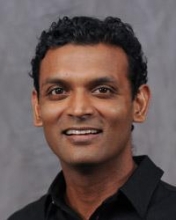
Photo of Prof. Alan L. Yuille
Venue:  Hosted via Zoom Speaker/s:  Prof. Alan L. Yuille (JHU)

Abstract: Current AI visual algorithms are very limited compared to the robustness and flexibility of the human visual system. These limitations, however, are often obscured by the standard performance measures (SPMs) used to evaluate vision algorithms which favor data-driven methods. SPMs, however, are problematic due to the combinatorial complexity of natural images and lead to unrealistic expectations about the effectiveness of current algorithms. We argue that tougher performance measures, such as out-of-distribution testing and adversarial examiners, are required to realistically evaluate vision algorithms and hence to encourage AI vision systems which can achieve human level performance. We illustrate this by studying object classification where the algorithms are trained on standard datasets which have limited occlusion but are tested on datasets where the objects are severally occluded (out-of-distribution testing) and/or where adversarial patches are placed in the images (adversarial examiners). We show that standard Deep Nets perform badly under these types of tests but Generative Compositional Nets, which perform approximate analysis by synthesis, are much more robust.


Zoom link: https://mit.zoom.us/j/95505708173?pwd=cjBLVlZWYXNXcDBIanRKMWZNNXZuZz09
Passcode: 522130

Organizer:  Hector Penagos Organizer Email:  cbmm-contact@mit.edu

CBMM Panel Discussion: “Testing Generative Models in the Brain”

Apr 13, 2021 - 4:00 pm
Venue:  Hosted via Zoom Speaker/s:  Panelists: Profs. Talia Konkle (Harvard), Josh Tenenbaum (MIT), and Sam Gershman (Harvard) Moderator: Prof. Ila Fiete (MIT)

Abstract: TBA


This panel discussion is being hosted via Zoom.


Zoom link: https://mit.zoom.us/j/98767476352


Organizer:  Kenneth Blum Hector Penagos Organizer Email:  cbmm-contact@mit.edu
CBMM Panel Discussion: Are Deep Nets "Just" Associative Memories?

Mar 9, 2021 - 4:00 pm
Venue:  Hosted via Zoom Speaker/s:  Panelists: Profs. Christos Papadimitriou (Columbia),  Tomaso A. Poggio (CBMM, MIT) and Santosh Vempala (Georgia Tech) Moderator: Kenneth Blum

Abstract: About fifty years ago, holography was proposed as a model of associative memory. Associative memories with similar properties were soon after implemented as simple networks of threshold neurons by Willshaw and Longuet-Higgins. It turns out that the recurrent Willshaw networks were very similar to today's deep nets. Thinking about deep learning in terms of associative networks memories a more realistic and sober perspective on the promises of deep learning and on its role in eventually understanding human intelligence.


This panel discussion will be hosted remotely via Zoom.

Zoom link: https://mit.zoom.us/j/99556310473

Organizer:  Hector Penagos Organizer Email:  cbmm-contact@mit.edu

CBMM Brains, Minds, and Machines Seminar Series: Common Sense Physics and Structured Representation in the Era of Deep Learning

Mar 2, 2021 - 2:00 pm
Portrait of Prof. Murray Shanahan
Venue:  Hosted via Zoom Speaker/s:  Prof. Murray Shanahan, Imperial College London

Host: Prof. Josh Tenenbaum (MIT)

Abstract:  The challenge of endowing computers with common sense remains one of the major obstacles to achieving the sort of general artificial intelligence envisioned by the field’s founders. A large part of human common sense pertains to the physics of the everyday world, and rests on a foundational understanding of such concepts as objects, motion, obstruction, containers, portals, support, and so on. In this talk I will discuss the challenge of common sense physics in the context of contemporary progress in deep reinforcement learning, and the question of how deep neural networks can learn representations at the required level of abstraction.

Zoom link: https://mit.zoom.us/j/92856609553

---


*Please note the change in start time, this talk will start at 2 PM EST.

Organizer:  Hector Penagos Organizer Email:  cbmm-contact@mit.edu

CBMM Brains, Minds, and Machines Seminar Series: Computation and Learning with Assemblies of Neurons

Feb 23, 2021 - 4:00 pm
Photo of Prof. Santosh Vempala
Venue:  Hosted via Zoom Speaker/s:  Prof. Santosh Vempala, Georgia Tech.

Host: Prof. Tomaso Poggio (MIT)

Abstract:  Despite great advances in ML, and in our understanding of the brain at the level of neurons, synapses, and neural circuits, we still have no satisfactory explanation for the brain's performance in perception, cognition, language, memory, behavior; as Nobel laureate Richard Axel put it, ``we have no logic for translating neural activity into thought and action''. The Assembly Calculus (AC) is a framework to fill this gap, a computational model whose basic data type is the assembly, a large subset of neurons whose simultaneous excitation is tantamount to the subject's thinking of an object, idea, episode, or word. The AC provides a repertoire of operations ("project", "reciprocal-project", "associate", "pattern-complete", etc.) whose implementation relies only on Hebbian plasticity and inhibition, and encompasses a complete computational system, thereby enabling complex function. Very recently, it has been shown, rigorously and in simulation, that the AC can learn to classify samples from well-separated classes. For basic concept classes in high dimension, an assembly can be formed and recalled for each class, and these assemblies are distinguishable as long as the input classes are sufficiently separated. Viewed as a learning algorithm, this mechanism is entirely online, generalizes from very few samples, and requires only mild supervision --- all attributes expected of a brain-like mechanism. The talk will highlight several fascinating questions that arise, from the convergence of assemblies to their unexpected generalization abilities.


This is joint work with Christos Papadimitriou, Max Dabagia, Mirabel Reid and Dan Mitropolsky. ​


Zoom link: https://mit.zoom.us/j/97301534627

Organizer:  Hector Penagos Organizer Email:  cbmm-contact@mit.edu

CBMM Panel Discussion: Should models of cortex be falsifiable?

Dec 1, 2020 - 3:00 pm
Speaker/s:  Presenters: Prof. Tomaso Poggio (MIT), Prof. Gabriel Kreiman (Harvard Medical School, BCH), and Prof. Thomas Serre (Brown U.) Discussants: Prof. Leyla Isik (JHU), Martin Schrimpf (MIT), Michael Lee (MIT), Prof. Susan Epstein (Hunter CUNY), and Jenelle Feather (MIT) Moderator: Prof. Josh McDermott (MIT)

Abstract:  Deep Learning architectures designed by engineers and optimized with stochastic gradient descent on large image databases have become de facto models of the cortex. A prominent example is vision. What sorts of insights are derived from these models? Do the performance metrics reveal the inner workings of cortical circuits or are they a dangerous mirage? What are the critical tests that models of cortex should pass?

We plan to discuss the promises and pitfalls of deep learning models contrasting them with earlier models (VisNet, HMAX,…) which were developed from the ground up following neuroscience data to account for critical properties of scale+position invariance and selectivity of primate vision.


This panel discussion will be hosted via Zoom, see details below.

Zoom link: https://mit.zoom.us/j/99175709426

Organizer:  Hector Penagos Organizer Email:  cbmm-contact@mit.edu

CBMM Brains, Minds, and Machines Seminar Series: Representations vs Algorithms: Symbols and Geometry in Robotics

Nov 3, 2020 - 4:00 pm
Photo: David Sella
Speaker/s:  Nick Roy, CSAIL, AeroAstro, MIT

Abstract: In the last few years, the ability for robots to understand and operate in the world around them has advanced considerably. Examples include the growing number of self-driving car systems, the considerable work in robot mapping, and the growing interest in home and service robots. However, one limitation is that robots most often reason and plan using very geometric models of the world, such as point features, dense occupancy grids and action cost maps. To be able to plan and reason over long length and timescales, as well as planning more complex missions, robots need to be able to reason about abstract concepts such as landmarks, segmented objects and tasks (among other representations). I will talk about recent work in joint reasoning about semantic representations and physical representations and what these joint representations mean for planning and decision making.

This seminar series talk will be hosted remotely via Zoom.

Zoom link: https://mit.zoom.us/j/96323330576

Organizer:  Hector Penagos Organizer Email:  cbmm-contact@mit.edu

CBMM Panel Discussion: Is the theory of Deep Learning relevant to applications?

Oct 27, 2020 - 4:00 pm
Speaker/s:  Panelists: Tomaso A Poggio (CBMM), Daniela L Rus (CSAIL), Max Tegmark (Physics), Lorenzo Rosasco (IIT), and Andrea Tacchetti (DeepMind)

Abstract: Deep Learning has enjoyed an impressive growth over the past few years in fields ranging from visual recognition to natural language processing. Improvements in these areas have been fundamental to the development of self-driving cars, machine translation  and healthcare applications. This progress has arguably been made possible by a combination of increases in computing power and clever heuristics, raising puzzling questions that lack full theoretical understanding. Here, we will discuss the relationship between the theory behind deep learning and its application.

This panel discussion will be hosted remotely via Zoom.

Zoom Webinar link: https://mit.zoom.us/j/99126775953

Organizer:  Hector Penagos Organizer Email:  cbmm-contact@mit.edu

Pages

Subscribe to Talks