Talks

Brains, Minds + Machines Seminar Series: Have We Missed Half of What the Neocortex Does? Allocentric Location as the Basis of Perception

Dec 15, 2017 - 4:30 pm
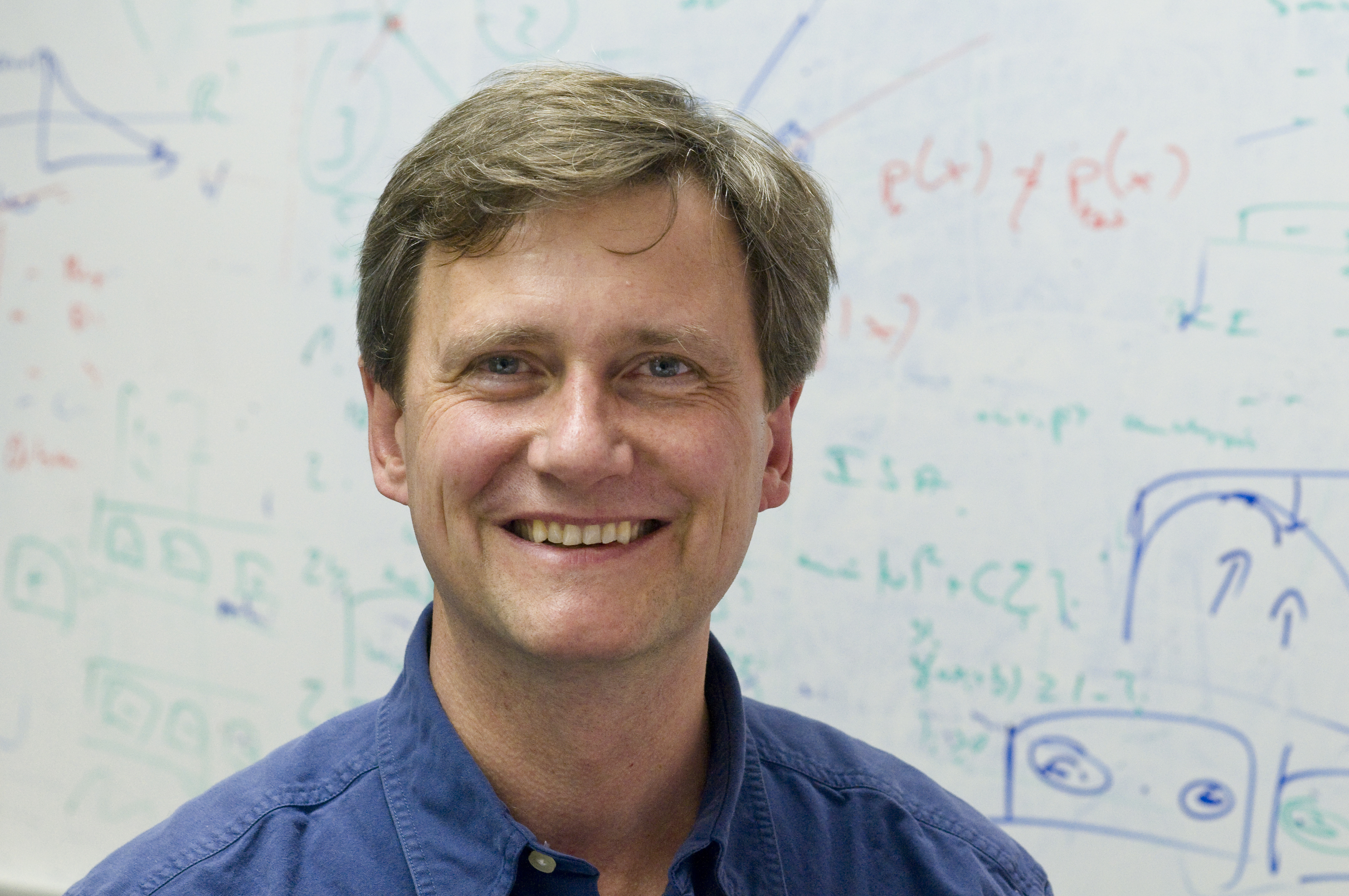
Photo of Jeff Hawkins
Venue:  Singleton Auditorium (MIT 46-3002) Address:  3rd Floor, MIT Bldg 46, 43 Vassar St., Cambridge MA 02139 Speaker/s:  Jeff Hawkins, Co-Founder, Numenta

Please note the change in start time. This talk will be starting at 4:30pm, on Friday, Dec. 15, 2017.

Abstract:  In this talk I will describe a theory that sensory regions of the neocortex process two inputs. One input is the well-known sensory data arriving via thalamic relay cells. We propose the second input is a representation of allocentric location. The allocentric location represents where the sensed feature is relative to the object being sensed, in an object-centric reference frame. As the sensors move, cortical columns learn complete models of objects by integrating sensory features and location representations over time. Lateral projections allow columns to rapidly reach a consensus of what object is being sensed. We propose that the representation of allocentric location is derived locally, in layer 6 of each column, using the same tiling principles as grid cells in the entorhinal cortex. Because individual cortical columns are able to model complete complex objects, cortical regions are far more powerful than currently believed. The inclusion of allocentric location offers the possibility of rapid progress in understanding the function of numerous aspects of cortical anatomy.

I will be discussing material from these two papers. Others can be found at www.Numenta.com/papers

A Theory of How Columns in the Neocortex Enable Learning the Structure of the World
URL: https://doi.org/10.3389/fncir.2017.00081

Why Neurons Have Thousands of Synapses, A Theory of Sequence Memory in the Neocortex
URL: https://doi.org/10.3389/fncir.2016.00023


Speaker Biography:  Jeff Hawkins is a scientist and co-founder at Numenta, an independent research company focused on neocortical theory. His research focuses on how the cortex learns predictive models of the world through sensation and movement. In 2002, he founded the Redwood Neuroscience Institute, where he served as Director for three years. The institute is currently located at U.C. Berkeley. Previously, he co-founded two companies, Palm and Handspring, where he designed products such as the PalmPilot and Treo smartphone. In 2004 he wrote “On Intelligence”, a book about cortical theory.

Hawkins earned his B.S. in electrical engineering from Cornell University in 1979. He was elected to the National Academy of Engineering in 2003.

Organizer:  Kathleen Sullivan Organizer Email:  cbmm-contact@mit.edu
Brains, Minds + Machines Seminar Series: Machine learning and AI for the sciences —towards understanding

Nov 17, 2017 - 2:00 pm
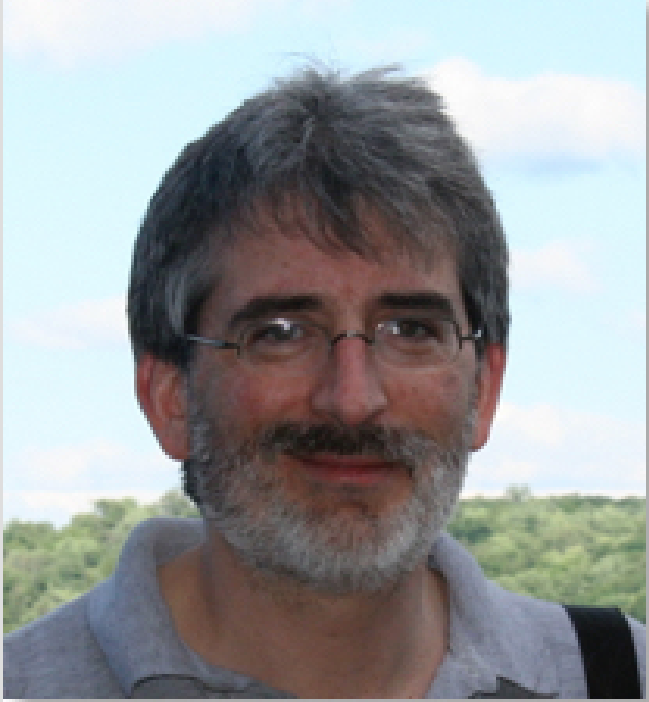
Klaus-Robert Müller
Venue:  MIT Building 46-3002 (Singleton Auditorium) Address:  43 Vassar St. Cambridge, MA 02139 Speaker/s:  Klaus-Robert Müller, Technische Universität Berlin

Abstract: In recent years, machine learning (ML) and artificial intelligence (AI) methods have begun to play a more and more enabling role in the sciences and in industry. In particular, the advent of large and/or complex data corpora has given rise to new technological challenges and possibilities. In his talk, Müller will touch upon the topic of ML applications in the sciences, in particular in neuroscience, medicine and physics. He will also discuss possibilities for extracting information from machine learning models to further our understanding by explaining nonlinear ML models.  E.g. Machine Learning Models for Quantum Chemistry can, by applying interpretable ML,  contribute to furthering chemical understanding.  Finally, Müller will briefly outline perspectives and limitations.

Organizer:  Joel Oller Organizer Email:  cbmm-contact@mit.edu
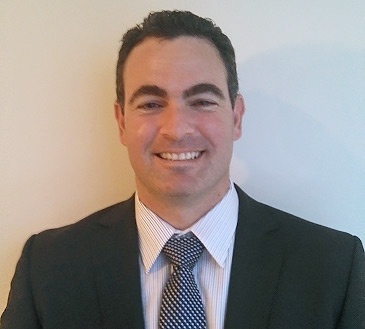
BostonTalks Happy Hour: Connected

Sep 28, 2017 - 7:00 pm
BostonTalks Happy Hour: Connected
Venue:  WGBH Studios Address:  WGBH Studios, One Guest Street, Brighton, MA 02135 Speaker/s:  Matt Peterson, Postdoc - MIT

Join CBMM's Postdoc Matt Peterson, and others, for BostonTalks Happy Hour: Connected

Connect with WGBH, local leaders, stories, trends and each other at BostonTalks. This September, it’s all about coming together. Hear from three speakers who are doing just that with their careers.

$10 admission - Full event information - http://www.wgbh.org/events/event.cfm?eid=BostonTalks%20Happy%20Hour:%20C...

Go behind the blue paint with Lyle Blaker of Blue Man Group, and hear how he connects with his audience without saying a word.

Matt Peterson of MIT studies how our brains make connections that allow us to know and understand others instantly through facial recognition.

The Farmer’s Daughter restaurant owner and Chef Chandra Gouldrup uses farm to table cooking to bring together flavors and connect people over delicious food.

Join Lyle (@BMGBoston), Matt (@mfpetersmit) and Chandra for a smarter happy hour hosted by Edgar B. Herwick III (@ebherwick3) from WGBH’s Curiosity Desk.

A Smarter Happy Hour
Connect with local experts in a variety of fields while enjoying the great company of your neighbors from Boston and beyond in this smarter happy hour reception. Each event combines short speaking programs, drinks and an opportunity for you to join the conversation.

Meet the host:
Edgar B. Herwick III hosts WGBH’s Curiosity Desk, where he digs a little deeper into topics in the news, explores the off-beat, and searches for answers to questions in the world around us. His radio features can be heard on 89.7 WGBH’s Morning Edition and All Things Considered, and his television features can be seen on WGBH’s Greater Boston.

You must be at least 21 with a valid ID to attend.

Limited seating will be available.

Organizer:  Joel Oller Organizer Email:  cbmm-contact@mit.edu

Brains, Minds + Machines Seminar Series: Perceptual Organization From a Bayesian Point of View

Apr 21, 2017 - 4:00 pm
Venue:  MIT Singleton Auditorium, Room 46-3002 Address:  43 Vassar St. Bldg. 46 Cambride, MA 02139 Speaker/s:  Jacob Feldman (Rutgers)

Title: Perceptual Organization From a Bayesian Point of View

Abstract: Perceptual organization is the process by which the visual system groups the visual image into distinct clusters or units. In this talk I'll sketch a Bayesian approach to grouping, formulating it as an inverse inference problem in which the goal it to estimate the organization that best explains the observed configuration of visual elements. We frame the problem as an instance of mixture estimation, in which the image configuration is assumed to have been generated by a set of distinct data-generating components or sources (``objects''), whose structure, locations, and number we seek to estimate.  I'll show how the approach works in a variety of classic problems of perceptual organization, including clustering, contour integration, figure/ground estimation, shape representation, part decomposition, object detection, and shape similarity. Because the Bayesian framework unifies a diverse array of grouping rules under a single principle, namely maximization of the Bayesian posterior---or, equivalently, minimization of descriptive complexity---I'll argue that it provides a useful formalization of the somewhat vague Gestalt notion of Prägnanz (simplicity or "good form").

Joint work with Manish Singh, Erica Briscoe, Vicky Froyen, John Wilder and Seha Kim.

Organizer:  Guy Ben-Yosef Georgios Evangelopoulos Organizer Email:  gevang@mit.edu

Brains, Minds + Machines Seminar Series: The Convergence of Machine Learning and Artificial Intelligence Towards Enabling Autonomous Driving

Mar 24, 2017 - 4:30 pm
Photo of Prof. Amnon Shashua
Venue:  MIT Bldg. 10-250 Address:  77 Massachusetts Avenue, Cambridge MA 02139 Speaker/s:  Amnon Shashua - Hebrew University, Co-founder, CTO and Chairman of Mobileye

Abstract: The field of transportation is undergoing a seismic change with the coming introduction of autonomous driving. The technologies required to enable computer driven cars involves the latest cutting edge artificial intelligence algorithms along three major thrusts: Sensing, Planning and Mapping. I will describe the challenges and the kind of machine learning algorithms involved, and will do that through the perspective of Mobileye’s activity in this domain.

Biography: Prof. Amnon Shashua holds the Sachs chair in computer science at the Hebrew University of Jerusalem. His field of expertise is computer vision and machine learning. For his academic achievements, he received the MARR prize Honorable Mention in 2001, the Kaye innovation award in 2004, and the Landau award in exact sciences in 2005.

In 1999 Prof. Shashua co-founded Mobileye, an Israeli company developing a system-on-chip and computer vision algorithms for a driving assistance system, providing a full range of active safety features using a single camera. Today, approximately 10 million cars from 23 automobile manufacturers rely on Mobileye technology to make their vehicles safer to drive.  

In 2010 Prof. Shashua co-founded OrCam which harnesses the power of artificial vision to assist people who are visually impaired or blind. The OrCam MyEye device is unique in its ability to provide visual aid to hundreds of millions of people, through a discreet wearable platform. Within its wide-ranging scope of capabilities, OrCam's device can read most texts (both indoors and outdoors) and learn to recognize thousands of new items and faces.

Organizer:  Tomaso Poggio Organizer Email:  tp@ai.mit.edu

Brains, Minds + Machines Seminar Series: Towards machines that perceive and communicate

May 26, 2017 - 4:00 pm
Venue:  MIT Singleton Auditorium, Room 46-3002 Speaker/s:  Kevin Murphy (Google Research) Host: Josh Tenenbaum

Abstract: In this talk, I summarize some recent work in my group related to visual scene understanding and "grounded" language understanding. In particular, I discuss the following topics:

I will explain how each of these pieces can be combined to develop systems that can better understand images and words.

Bio: Kevin Murphy is a research scientist at Google in Mountain View, California, where he works on AI, machine learning, computer vision, and natural language understanding. Before joining Google in 2011, he was an associate professor (with tenure) of computer science and statistics at the University of British Columbia in Vancouver, Canada. Before starting at UBC in 2004, he was a postdoc at MIT.  Kevin got his BA from U. Cambridge, his MEng from U. Pennsylvania, and his PhD from UC Berkeley. He has published over 80 papers in refereed conferences and journals, as well as an 1100-page textbook called "Machine Learning: a Probabilistic Perspective" (MIT Press, 2012), which was awarded the 2013 DeGroot Prize for best book in the field of Statistical Science. Kevin is also the (co) Editor-in-Chief of JMLR (the Journal of Machine Learning Research).

Organizer:  Guy Ben-Yosef Georgios Evangelopoulos Organizer Email:  gby@mit.edu

Brains, Minds + Machines Seminar Series: What Can Machines Learn, and What Does It Mean for Occupations and Industries?

May 5, 2017 - 4:00 pm
Venue:  MIT, Bldg. 46-3189 Address:  43 Vassar St, Cambridge MA 02139 Speaker/s:  Erik Brynjolfsson (MIT)

Title: What Can Machines Learn, and What Does It Mean for Occupations and Industries?

Abstract: This talk will present a preliminary framework and approach for understanding the potential effects of machine learning (ML) on tasks, occupations and industries. Digital technologies have already had a substantial effect on the wages and income. The increased availability of high quality data and rapid advances in ML have the potential to generate even larger effects in the coming decade. The ultimate impact will depend in part on the feasibility, costs and capabilities of ML-based applications for various types tasks and the speed with which they are implemented. Workers, firms and industries with complementary investments (e.g. relevant skills, data, and technologies) are well positioned to benefit, while those whose tasks are easily substituted for by ML will likely face downward pressure on wages and prices. We are developing a taxonomy of tasks most suitable for ML and plan to estimate some implications of our model by analyzing data from a major online resume and job postings marketplace.


Speaker Bio: Erik Brynjolfsson is Director of the MIT Initiative on the Digital Economy, Professor at MIT Sloan School, and Research Associate at NBER. His research examines the effects of information technologies on business strategy, productivity and performance, digital commerce, and intangible assets. At MIT, he teaches courses on the Economics of Information and the Analytics Lab. Author or co-editor of several books including NYTimes best-seller The Second Machine Age: Work, Progress and Prosperity in a Time of Brilliant Technologies, Brynjolfsson is editor of SSRN’s Information System Network and has served on the editorial boards of numerous academic journals.


Organizer:  Georgios Evangelopoulos Tomaso Poggio Organizer Email:  gevang@mit.edu

CBMM Special Seminar: Machine Learning Techniques and Applications in Finance, Healthcare and Recommendation Systems

Apr 12, 2017 - 2:00 pm
David Vogel
Venue:  MIT Singleton Auditorium 46-3002 Address:  43 Vassar St, Cambridge MA 02139 Speaker/s:  David Vogel, Trustee (Voloridge Investment Management, LLC)

Abstract: The introductory portion of this talk will review some state-of-the-art machine learning techniques. We will discuss concepts of ensembles and popular methodologies within this category. We’ll touch upon collaborative filtering techniques used for recommendation systems, and we’ll present certain algorithms published specifically for healthcare models.

We will later focus on application of the mentioned machine learning techniques covering healthcare, recommendation systems and portfolio construction in finance. We will refer to some past data modeling competitions such as Netflix (2007) and the Heritage Health Prize (2014) where thousands of algorithms were pitted against each other and evaluated impartially on a withheld data set. Within the financial application we will present risk management models that can be used to dictate/constrain positions within the portfolio construction process.

Biography: David S. Vogel is an award-winning predictive modeling scientist. In 2009, he founded the Voloridge Investment Management, LLC and also serves as its Chief Scientist, Chief Executive Officer, Chief Technology Officer and Managing Member. He has earned international recognition for models ranging from medical applications to direct marketing and has won numerous modeling competitions. David has also been invited to speak at conferences and research institutes worldwide.

Organizer:  Tomaso Poggio Organizer Email:  tpoggio@mit.edu

Towards General Artificial Intelligence

Apr 20, 2016 - 5:00 pm
An illustration (pictured) shows a traditional Go board and half showing computer-calculated moves. Image credit Google
Venue:  MIT Green Building, Bldg 54 Address:  Room 54-100, MIT Green Building Speaker/s:  Demis Hassabis, Google DeepMind

Abstract: Dr. Demis Hassabis is the Co-Founder and CEO of DeepMind, the world’s leading General Artificial Intelligence (AI) company, which was acquired by Google in 2014 in their largest ever European acquisition. Demis will draw on his eclectic experiences as an AI researcher, neuroscientist and videogames designer to discuss what is happening at the cutting edge of AI research, including the recent historic AlphaGo match, and its future potential impact on fields such as science and healthcare, and how developing AI may help us better understand the human mind.

This talk is presented as part of the CBMM Annual Retreat.

Organizer:  Tomaso Poggio Organizer Email:  cbmm-contact@mit.edu

CBMM Special Seminar: Reading Large-scale Neural Codes Underlying Memory and Cognition in Behaving Animals

Nov 13, 2015 - 4:00 pm
Photo of Prof. Mark J. Schnitzer
Venue:  MIT Singleton Auditorium (46-3002) Address:  43 Vassar St., Cambridge MA 02139 MIT Bldg. 46., 3rd Floor, Room 46-3002 Speaker/s:  Mark J. Schnitzer

Prof. Mark J. Schnitzer, Departments of Biology and Applied Physics, Howard Hughes Medical Institute, Stanford University

Abstract: A longstanding challenge in neuroscience is to understand how the dynamics of large populations of individual neurons contribute to animal behavior and brain disease. Addressing this challenge has been difficult partly due to lack of appropriate brain imaging technology for visualizing cellular dynamics in awake behaving animals. I will discuss several new optical technologies of this kind. The miniature integrated fluorescence microscope allows one to monitor the dynamics of up to ~1000 individual genetically identified neurons in behaving mice over weeks. I will describe ongoing studies using this technology to understand the neural codes underlying episodic, emotional and reward related memories. Toward elucidating the interactions between brain areas during active behavior, multi-axis optical imaging can record the dynamics of two or more neural ensembles residing in different brain regions. Lastly, genetically encoded voltage indicators are progressing rapidly in their capacities to allow high fidelity detection of neural spikes and accurate estimation of spike timing, and with further improvements might soon be ready for use in behaving animals.

Bio: Professor Schnitzer is an HHMI Investigator, the Co-Director of the Cracking the Neural Code Program, and a faculty member of the Neuroscience, Biophysics, and Molecular Imaging Programs in the Stanford School of Medicine, as well as of the Stanford Neurosciences Institute and Stanford Bio-X. Dr. Schnitzer has longstanding interests in neural circuit dynamics and optical imaging, and his optical innovations are used in over a hundred neuroscience labs in the USA, Europe and Asia, and in the neuropharmaceutical industry. The miniature integrated fluorescence microscope invented in his lab was named the 2013 Innovation of the Year by The Scientist magazine. Dr. Schnitzer has received the NIH Director’s Pioneer Award, the Biophysical Society’s Michael and Kate Bárány Award, and a Presidential Young Investigator Award, and was a finalist for the 2013 Israel Brain Prize. He is a member of the National Institutes of Health working group for President Obama's BRAIN Initiative (Brain Research through Advancing Innovative Neurotechnologies).

Organizer:  Matt Wilson Jon Newman Organizer Email:  mwilson@mit.edu

Pages

Subscribe to Talks