Seminars

CBMM | Quest: Brains, Minds, and Machines Seminar Series: Using AI to accelerate scientific discovery

Apr 5, 2022 - 4:30 pm
Photo of Dr. Demis Hassabis, Founder and CEO of DeepMind
Venue:  MIT Lecture Hall 26-100 Speaker/s:  Dr. Demis Hassabis, Founder and CEO of DeepMind

The Spring 2022 Brains, Minds, and Machines (BMM) Seminar Series will be hosted in a hybrid format. Please see the information included below regarding attending the event either in-person or watch via live stream.

Abstract: The past decade has seen incredible advances in the field of Artificial Intelligence (AI). DeepMind has been in the vanguard of many of these big breakthroughs, pioneering the development of self-learning systems like AlphaGo, the first program to beat the world champion at the complex game of Go. Games have proven to be a great training ground for developing and testing AI algorithms, but the aim at DeepMind has always been to build general learning systems ultimately capable of solving important problems in the real world. I believe we are on the cusp of an exciting new era in science with AI poised to be a powerful tool for accelerating scientific discovery itself. We recently demonstrated this potential with our AlphaFold system, a solution to the 50-year grand challenge of protein structure prediction, culminating in the release of the most accurate and complete picture of the human proteome.

Speaker Biography:  Demis Hassabis is the Founder and CEO of DeepMind, the world’s leading AI research company that aims to solve intelligence to advance science and benefit humanity.

Founded in London in 2010, DeepMind has achieved breakthrough results in many challenging AI domains from Atari games to StarCraft II, and has published over 1000 research papers - including more than two dozen in Nature and Science

In 2016, DeepMind developed AlphaGo, the first program to beat a world champion at the complex game of Go. In 2020, its AlphaFold program was heralded as a solution to the 50-year grand challenge of protein structure prediction and in 2021, DeepMind launched the AlphaFold Protein Structure Database, which offers the most complete and accurate picture of the human proteome to date.  

A chess prodigy, Demis reached master standard aged 13, and went on to program the multi-million selling simulation game Theme Park aged 17. After graduating from Cambridge University in computer science, he founded pioneering videogames company Elixir Studios, and completed a PhD in cognitive neuroscience at University College London. Science listed his neuroscience research on imagination as one of 2007’s top ten breakthroughs, and in 2021, AlphaFold2 was selected as the Breakthrough of the Year.

He is a Fellow of the Royal Society and the Royal Academy of Engineering. In 2017 he featured in the Time 100 list of most influential people, and in 2018 he was awarded a CBE for services to science and technology. 

Organizer:  Tomaso Poggio Organizer Email:  cbmm-contact@mit.edu

CBMM | Quest: Brains, Minds, and Machines Seminar Series: Minds/Machines: Alloys for prediction and control of complex systems

Feb 22, 2022 - 4:00 pm
Photo of Prof. Petros Koumoutsakos, Harvard U.
Venue:  Singleton Auditorium (46-3002) Address:  MIT Building 46 | Brain and Cognitive Sciences Complex 43 Vassar Street, Cambridge MA, 02139 3rd Floor, MIT Building 46 Speaker/s:  Prof. Petros Koumoutsakos, Harvard University

The Spring 2022 Brains, Minds, and Machines (BMM) Seminar Series will be hosted in a hybrid format. Please see the information included below regarding attending the event either in-person or remotely via Zoom connection

Please note, MIT is requiring that all attendees, including MIT COVIDpass users, sign-in to the event prior to entering the auditorium.

Abstract: Human minds have produced laws to describe complex systems along with numerical methods and algorithms that harness the powers of modern supercomputers. Simulations and data processing have provided our generation with unprecedented physical insight. Despite progress in methods, software and hardware we realize that we will never be able to rely solely on this mode of inquiry to understand, predict and control complex systems. Artificial intelligence (AI) offers new modes of inquiry but questions remain on whether it replaces exiting modes of inquiry, complements them and how ? In this talk I will present algorithms formulated on a fusion of computational science and AI for the prediction and control of diverse physical systems. I will present the Remember and Forget Experience Replay (ReFer) algorithm for reinforcement learning, a multiscale approach to Learning the Effective Dynamics (LED) of complex systems and a fusion of scientific computing and multi-agent reinforcement learning (SciMARL) for developing closures for unresolved dynamics of complex systems. Examples will include benchmark problems from physics engines to high fidelity simulations of complex systems that range from molecular systems to fish schooling. I will discuss successes and failures and hope for a dialogue on how the integration of AI and Computational science may lead to new forms of Computational Intelligence.

Bio: Petros Koumoutsakos is Herbert S. Winokur, Jr. Professor of Engineering and Applied Sciences, Faculty Director of the Institute for Applied Computational Science (IACS) and Department Chair of Applied Mathematics at Harvard John A. Paulson School of Engineering and Applied Sciences (SEAS). He studied Naval Architecture (Diploma-NTU of Athens, M.Eng.-U. of Michigan), Aeronautics and Applied Mathematics (PhD-Caltech) and has served as the Chair of Computational Science at ETH Zurich (1997-2020). Petros is elected Fellow of the American Society of Mechanical Engineers (ASME), the American Physical Society (APS), the Society of Industrial and Applied Mathematics (SIAM). He is recipient of the Advanced Investigator Award by the European Research Council and the ACM Gordon Bell prize in Supercomputing. He is elected International Member to the US National Academy of Engineering (NAE). His research interests are on the fundamentals and applications of computing and artificial intelligence to understand, predict and optimize fluid flows in engineering, nanotechnology, and medicine.


Link to attend talk remotely via Zoom:

Zoom link: https://mit.zoom.us/j/94504251999?pwd=WFpHM2lNYUJZTUVGbjdsanduUkhTdz09


Guidance for attending in-person:

MIT attendees:
MIT attendees will need to be registered via the MIT COVIDpass system to have access to MIT Building 46.
Please visit URL https://covidpass.mit.edu/ for more information regarding MIT COVIDpass.

MIT Covid Pass users do not need to fill out a Tim Ticket, but still need to be scanned in upon event entry. (Tim Tickets are used only for non-MIT event attendees.)

On the day of the event, please make sure to complete your testing and attestation requirements. Please complete your attestation no earlier than 24 hours in advance of the event and no later than 30 minutes prior to the event.

Present the barcode on the back of your MIT ID card (removed from any encasing) or in your MIT Atlas mobile app.

Non-MIT attendees:

MIT is currently welcoming visitors to attend talks in person. All visitors to the MIT campus are required to follow MIT COVID19 protocols, see URL https://now.mit.edu/policies/campus-access-and-visitors/.  Specifically, visitors are required to wear a face-covering/mask while indoors and use the new MIT TIM Ticket system for accessing MIT buildings. Per MIT’s event policy, use of the Tim Tickets system is required for all indoor events; for information about this and other current MIT policies, visit MIT Now.

Please obtain your Tim Ticket no earlier than 24 hours in advance of the event and no later than 30 minutes prior to the event.

  1. Please follow the TIM Ticket link listed below.
  2. Click on “Visitor”
  3. Enter mobile number / cell phone number
  4. Enter pin code sent to your mobile device
  5.  Enter contact details
  6. Tim Ticket Registration acknowledgement, click on, “I’m ready! Let’s get started”
  7. Read acknowledgment form and accept MIT guidelines for campus access and agree to adhere to MIT rules/protocols.
  8. Attest you have been fully vaccinated against Covid-19 or have a religious belief or medical condition that prevents you from receiving the vaccine.
  9. Tap Tim Ticket, swipe down, and click on “Submit my daily attestation” Reminder: you must attest no earlier than 24 hours in advance of the event and no later than 30 minutes prior to the event
  10.  Fill out the daily attestation and tap submit when completed
  11. 1Confirm your attestation is correct
  12. You will be presented a QR code. This QR code is tied to your name and contact information that you can then use to scan for both building and event access

Link to this event's MIT TIM TICKET: https://tim-tickets.atlas-apps.mit.edu/ypwgQaV764SSvJhw6

To access MIT Bldg. 46 with a TIM Ticket, please enter the building via the McGovern/Main Street entrance - 524 Main Street (on GPS). This entrance is equipped with a QR reader that can read the TIM Ticket. A map of the location of, and an image of, this entrance is available at URL: https://mcgovern.mit.edu/contact-us/

General TIM Ticket information:

Please read MIT’s Privacy Statement, which explains how MIT handles and uses the personal information we collect as part of MIT’s Tim Tickets application: https://covidapps.mit.edu/privacy

A visitor may use a Tim Ticket to access Bldg. 46 any time between 6 a.m. and 6 p.m., M-F.

Visitors must complete a health attestation no earlier than 24 hours in advance of their visit and no later than 30 minutes prior to the event

A Tim Ticket is a QR code that serves as a visitor pass. A Tim Ticket, named for MIT’s mascot, Tim the Beaver, is the equivalent of giving someone your key to unlock a building door, without actually giving up your keys.

This system allows MIT to collect basic information about visitors entering MIT buildings while providing MIT hosts a convenient way to invite visitors to safely access our campus.

Information collected by the TIM Ticket:

  • Name
  • Phone number
  • Email address
  • COVID-19 vaccination status (i.e., whether fully vaccinated or exempt)
  • Symptom status and wellness information for the day of visit

The Tim Tickets system can be accessed by invited guests through the MIT Tim Tickets mobile application (available for iOS 13+ or Android 7+) or on the web at visitors.mit.edu.

Visitors must acknowledge and agree to terms for campus access, confirm basic contact information, and submit a brief attestation about health and vaccination status. Visitors should complete these steps at least 30 minutes before scanning into an MIT building.

For more information on the TIM Tickets, please visit https://covidapps.mit.edu/visitors#for-access

Organizer:  Hector Penagos Organizer Email:  cbmm-contact@mit.edu
CBMM Brains, Minds, and Machines Seminar Series: Building a temporal state space for song learning

Dec 7, 2021 - 4:00 pm
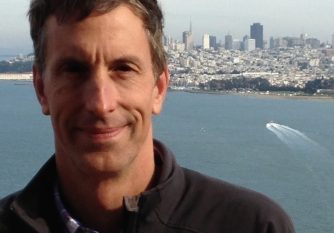
Photo of Prof. Michale Fee, MIT BCS
Venue:  Singleton Auditorium (46-3002) Address:  MIT Building 46 | Brain and Cognitive Sciences Complex, 43 Vassar Street, Cambridge MA 02139 Speaker/s:  Prof. Michale Fee, Department Head & Dorflinger Professor, Dept. Brain and Cognitive Sciences; Investigator, McGovern Institute for Brain Research; MIT

The Fall 2021 Brains, Minds, and Machines (BMM) Seminar Series will be hosted in a hybrid format. Please see the information included below regarding attending the event either in-person or remotely via Zoom connection

Please note, MIT is requiring that all attendees, including MIT COVIDpass users, sign-in to the event prior to entering the auditorium.

Abstract:  Songbird vocalizations are produced by a sparse sequence of spike bursts in a motor circuit that controls the vocal output on a fast (10ms) timescale. This sparse sequence is also transmitted to song learning circuits, presumably to control the temporal specificity of vocal learning, a process thought to proceed by mechanisms similar to reinforcement learning (RL). Electrophysiological recordings in young birds have revealed that such sequences do not exist at the earliest stages of learning, and emerge only gradually during song acquisition. How does this sparse temporal basis, or state space, emerge during development?  Songbirds learn their vocalizations by imitating the song of an adult bird, suggesting that the auditory memory of the tutor song may play a role in setting up sequences in the motor system, creating a state space custom built for a given tutor song.  I will describe a model for how temporal sequences to support RL of this complex behavioral pattern may be constructed in the brain, and will propose a hypothesis for how the auditory system could shape these sequences to align with a memory of the tutor song, thus facilitating song evaluation.​

Link to attend talk remotely via Zoom:

Zoom link: https://mit.zoom.us/j/93976178761?pwd=TFVPV2ZTNGk0K1hxYVNUTWFJSngyUT09


Guidance for attending in-person:

MIT attendees:
MIT attendees will need to be registered via the MIT COVIDpass system to have access to MIT Building 46.
Please visit URL https://covidpass.mit.edu/ for more information regarding MIT COVIDpass.

Non-MIT attendees:

MIT is currently welcoming visitors to attend talks in person. All visitors to the MIT campus are required to follow MIT COVID19 protocols, see URL https://now.mit.edu/policies/campus-access-and-visitors/.  Specifically, visitors are required to wear a face-covering/mask while indoors and use the new MIT TIM Ticket system for accessing MIT buildings. Per MIT’s event policy, use of the Tim Tickets system is required for all indoor events; for information about this and other current MIT policies, visit MIT Now.

Link to this event's MIT TIM TICKET: https://tim-tickets.atlas-apps.mit.edu/eyYmNNFToY791sQq8

To access MIT Bldg. 46 with a TIM Ticket, please enter the building via the McGovern/Main Street entrance - 524 Main Street (on GPS). This entrance is equipped with a QR reader that can read the TIM Ticket. A map of the location of, and an image of, this entrance is available at URL: https://mcgovern.mit.edu/contact-us/

General TIM Ticket information:

A visitor may use a Tim Ticket to access Bldg. 46 any time between 6 a.m. and 6 p.m., M-F

A Tim Ticket is a QR code that serves as a visitor pass. A Tim Ticket, named for MIT’s mascot, Tim the Beaver, is the equivalent of giving someone your key to unlock a building door, without actually giving up your keys.

This system allows MIT to collect basic information about visitors entering MIT buildings while providing MIT hosts a convenient way to invite visitors to safely access our campus.

Information collected by the TIM Ticket:

  • Name
  • Phone number
  • Email address
  • COVID-19 vaccination status (i.e., whether fully vaccinated or exempt)
  • Symptom status and wellness information for the day of visit

The Tim Tickets system can be accessed by invited guests through the MIT Tim Tickets mobile application (available for iOS 13+ or Android 7+) or on the web at visitors.mit.edu.

Visitors must acknowledge and agree to terms for campus access, confirm basic contact information, and submit a brief attestation about health and vaccination status. Visitors should complete these steps at least 30 minutes before scanning into an MIT building.

For more information on the TIM Tickets, please visit https://covidapps.mit.edu/visitors#for-access

Organizer:  Hector Penagos Organizer Email:  cbmm-contact@mit.edu

CBMM Brains, Minds, and Machines Seminar Series: Boundary conditions for language in biological and artificial neural systems

Nov 9, 2021 - 9:00 am
Photo of Dr. Andrea E. Martin
Venue:  This seminar talk will be hosted remotely via Zoom. Speaker/s:  Andrea E. Martin, Lise Meitner Group Leader, Max-Planck Institute for Psycholinguistics Research website: http://www.andreaemartin.com

This seminar talk will be hosted remotely via Zoom; no in-person attendance.

Hosted by: Sam Gershman

Abstract: Human language is a fundamental biological signal with computational properties that are markedly different than in other perception-action systems: hierarchical relationships between units (e.g., phonemes, morphemes, words, phrases), and the unbounded ability to combine smaller units into larger ones. These and other formal properties have long made language difficult to account for from a biological systems perspective, and within models of cognition. I focus on this foundational puzzle – essentially “what does a system need to represent information that is both algebraic and statistical?” - and discuss the computational requirements, including the role of neural oscillations across time, for what I believe is necessary for a system to represent and process language. I build on examples from cognitive neuroimaging data and computational simulations, and outline a developing theory that integrates basic insights from linguistics and psycholinguistics with the currency of neural computation, in turn demarcating the boundary conditions for artificial systems making contact with human language.

Link to attend talk remotely via Zoom: https://mit.zoom.us/j/96069003349?pwd=dDkrYmkwRjhaT09hcllIbHVKdVNuUT09

Organizer:  Hector Penagos Organizer Email:  cbmm-contact@mit.edu

CBMM Brains, Minds, and Machines Seminar Series: Liquid Neural Networks

Oct 5, 2021 - 4:00 pm
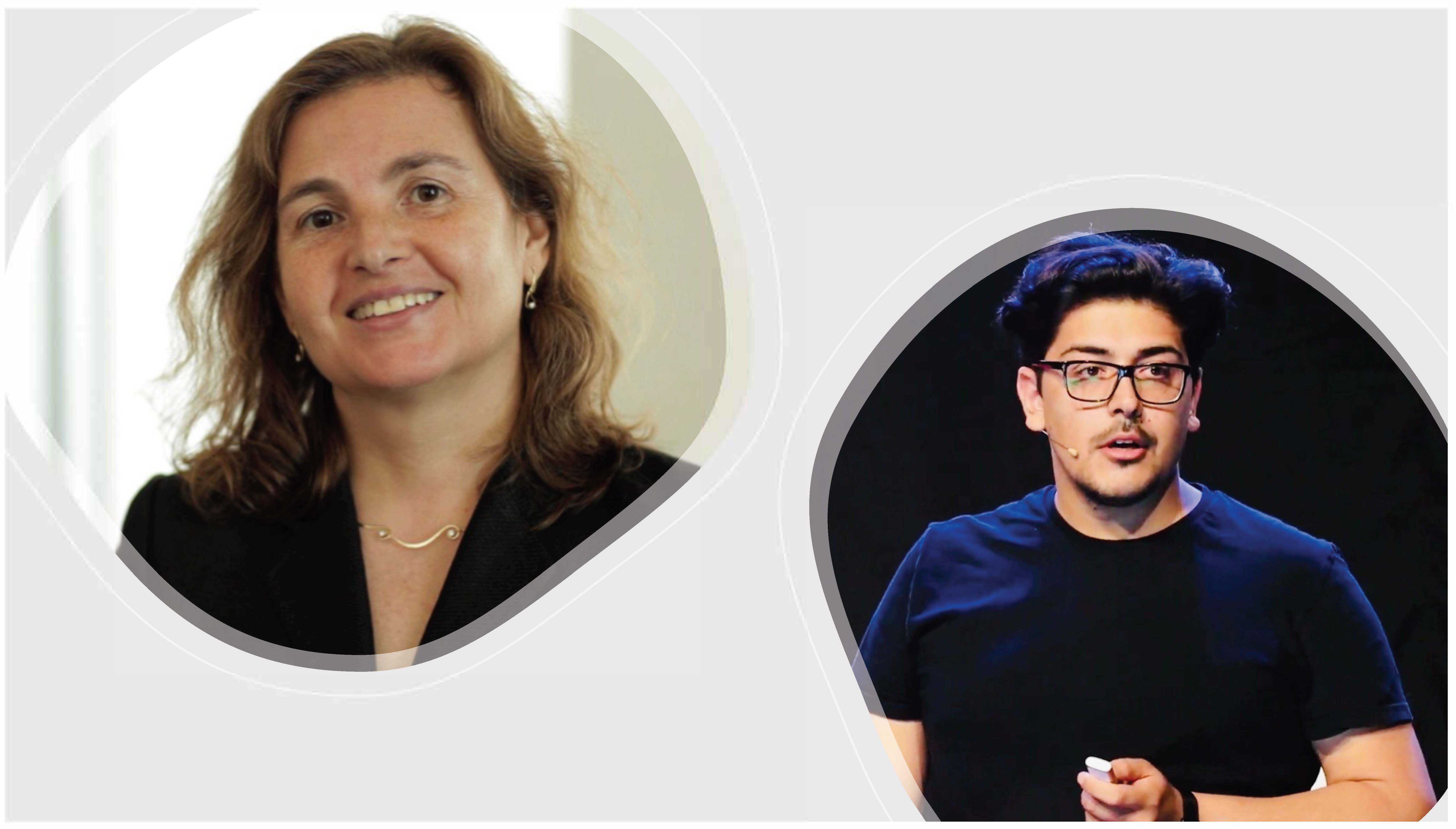
Photo of Prof. Daniela Rus and Dr. Ramin Hasani, MIT CSAIL
Venue:  Singleton Auditorium (46-3002) Address:  MIT Building 46 | Brain and Cognitive Sciences Complex, 43 Vassar Street, Cambridge MA 02139 Speaker/s:  Prof. Daniela Rus, Director of the Computer Science and Artificial Intelligence Laboratory (CSAIL) , Deputy Dean of Research for the Schwarzman College of Computing, MIT Research website: http://danielarus.csail.mit.edu/ Dr. Ramin Hasani, CSAIL, MIT Research website: http://www.raminhasani.com/

The Fall 2021 Brains, Minds, and Machines (BMM) Seminar Series will be hosted in a hybrid format.
Please see the information included below regarding attending the event either in-person or remotely via Zoom connection

Abstract: In this talk, we will discuss the nuts and bolts of the novel continuous-time neural network models: Liquid Time-Constant (LTC) Networks. Instead of declaring a learning system's dynamics by implicit nonlinearities, LTCs construct networks of linear first-order dynamical systems modulated via nonlinear interlinked gates. LTCs represent dynamical systems with varying (i.e., liquid) time-constants, with outputs being computed by numerical differential equation solvers. These neural networks exhibit stable and bounded behavior, yield superior expressivity within the family of neural ordinary differential equations, and give rise to improved performance on time-series prediction tasks compared to advance recurrent network models.

Speaker Biographies:

Dr. Daniela Rus is the Andrew (1956) and Erna Viterbi Professor of Electrical Engineering and Computer Science and Director of the Computer Science and Artificial Intelligence Laboratory (CSAIL) at MIT. Rus’s research interests are in robotics, mobile computing, and data science. Rus is a Class of 2002 MacArthur Fellow, a fellow of ACM, AAAI and IEEE, and a member of the National Academy of Engineers, and the American Academy of Arts and Sciences. She earned her PhD in Computer Science from Cornell University. Prior to joining MIT, Rus was a professor in the Computer Science Department at Dartmouth College.

Dr. Ramin Hasani is a postdoctoral associate and a machine learning scientist at MIT CSAIL. His primary research focus is on the development of interpretable deep learning and decision-making algorithms for robots. Ramin received his Ph.D. with honors in Computer Science at TU Wien, Austria. His dissertation on liquid neural networks was co-advised by Prof. Radu Grosu (TU Wien) and Prof. Daniela Rus (MIT). Ramin is a frequent TEDx speaker. He has completed an M.Sc. in Electronic Engineering at Politecnico di Milano (2015), Italy, and has got his B.Sc. in Electrical Engineering – Electronics at Ferdowsi University of Mashhad, Iran (2012).

Guidance for attending in-person:

MIT attendees:
MIT attendees will need to be registered via the MIT COVIDpass system to have access to MIT Building 46.
Please visit URL https://covidpass.mit.edu/ for more information regarding MIT COVIDpass.

Non-MIT attendees:

MIT is currently welcoming visitors to attend talks in person. All visitors to the MIT campus are required to follow MIT COVID19 protocols, see URL https://now.mit.edu/policies/campus-access-and-visitors/.  Specifically, visitors are required to wear a face-covering/mask while indoors and use the new MIT TIM Ticket system for accessing MIT buildings. Per MIT’s event policy, use of the Tim Tickets system is required for all indoor events; for information about this and other current MIT policies, visit MIT Now.

Link to this event's MIT TIM TICKET: https://tim-tickets.atlas-apps.mit.edu/bhsy3hztLJvG2EMi7

To access MIT Bldg. 46 with a TIM Ticket, please enter the building via the McGovern/Main Street entrance - 524 Main Street (on GPS). This entrance is equipped with a QR reader that can read the TIM Ticket. A map of the location of, and an image of, this entrance is available at URL: https://mcgovern.mit.edu/contact-us/

General TIM Ticket information:

A visitor may use a Tim Ticket to access Bldg. 46 any time between 6 a.m. and 6 p.m., M-F

A Tim Ticket is a QR code that serves as a visitor pass. A Tim Ticket, named for MIT’s mascot, Tim the Beaver, is the equivalent of giving someone your key to unlock a building door, without actually giving up your keys.

This system allows MIT to collect basic information about visitors entering MIT buildings while providing MIT hosts a convenient way to invite visitors to safely access our campus.

Information collected by the TIM Ticket:

  • Name
  • Phone number
  • Email address
  • COVID-19 vaccination status (i.e., whether fully vaccinated or exempt)
  • Symptom status and wellness information for the day of visit

The Tim Tickets system can be accessed by invited guests through the MIT Tim Tickets mobile application (available for iOS 13+ or Android 7+) or on the web at visitors.mit.edu.

Visitors must acknowledge and agree to terms for campus access, confirm basic contact information, and submit a brief attestation about health and vaccination status. Visitors should complete these steps at least 30 minutes before scanning into an MIT building.

For more information on the TIM Tickets, please visit https://covidapps.mit.edu/visitors#for-access

Details to attend talk remotely via Zoom:

Zoom link: https://mit.zoom.us/j/97696583753?pwd=TTlwNVkxcS9IaWFxVllBajBrZG9SZz09

Organizer:  Hector Penagos Organizer Email:  cbmm-contact@mit.edu

CBMM Brains, Minds, and Machines Seminar Series: Efficient representation, learning, and planning through abstraction: clustering cognitive spaces into submaps

Sep 14, 2021 - 4:00 pm
Photo of Prof. Ila Fiete (MIT BCS)
Venue:  Singleton Auditorium (46-3002) Speaker/s:  Prof. Ila Fiete, MIBR, BCS Dept., MIT

The Fall 2021 Brains, Minds, and Machines (BMM) Seminar Series will be hosted in a hybrid format.
Please see the information included below regarding attending the event either in-person or remotely via Zoom connection

Abstract: Episodic memory involves fragmenting the continuous stream of experience into discrete episodes. Not coincidentally, the hippocampus, which plays a central role in both episodic memory and spatial navigation, represents large spatial environments in a fragmented way even when explored in a continuous trajectory. In non-spatial and non-memory contexts too, humans report sudden contextual re-anchoring or re-orientation when reading garden path sentences ('Time flies like an arrow, fruit flies like a banana.") or watching a movie with viewpoint changes. In this talk, I will describe a theory for the online and real-time generation of fragmented representations and contextual re-anchoring from continuous experience that resemble those obtained by principled but offline and computationally complex information-based algorithms. The resulting fragmentations closely match those observed from neural recordings in animals navigating through complex environments. I will discuss the utility of map fragmentation, as a form of state abstraction that enables representation fidelity, flexible and rapid learning through reuse of existing fragments, and many-fold improvements in the ability to plan and navigate through complex environments relative to more global representations.

Speaker Biography: Fiete joined the McGovern Institute as an associate investigator in early 2019, soon after arriving at MIT to join the Department of Brain and Cognitive Sciences. Fiete earned a BS in Mathematics and Physics at the University of Michigan, obtaining her PhD at Harvard University in the Department of Physics in 2004. She conducted her postdoctoral work at the Kavli Institute for Theoretical Physics at the University of California, Santa Barbara while she was also a visiting member of the Center for Theoretical Biophysics at the University of California, San Diego. Fiete subsequently spent two years at Caltech as a Broad Fellow in brain circuitry, then joined the faculty of the University of Texas at Austin.

Link  to Fiete Lab: https://fietelab.mit.edu/

Guidance for attending in-person:

MIT is requiring that all attendees, even MIT COVIDpass members, will be asked to sign-in to attend the talk in-person. The information that we are required to collect includes the attendee's name and cell phone number or email address, which will be used for contact tracing purposes only.

MIT attendees:
MIT attendees will need to be registered via the MIT COVIDpass system to have access to MIT Building 46.
Please visit URL https://covidpass.mit.edu/ for more information regarding MIT COVIDpass.

Non-MIT attendees:
MIT is currently welcoming visitors to attend talks in person. All visitors to the MIT campus are required to follow MIT COVID19 protocols, see URL https://now.mit.edu/policies/campus-access-and-visitors/.  Specifically, visitors are required to sign an attendee and contact tracking waiver upon arrival to the MIT campus and must wear a face-covering/mask while indoors. Please plan to arrive early complete the required attendee waiver prior to the start of the talk.
 
Access to MIT Bldg. 46 is restricted and visitors must be met at the door. Building access for this talk will be limited to the MIT BCS Dept. entrance at 43 Vassar Street, from 3:45 PM ET to 4:15 PM ET. This entrance is located on the street level - directly across from the Frank Gehry-designed CSAIL Stata Building. The entrance will be manned from 3:45 PM ET to 4:15 PM ET. We regret that we do not have sufficient staff to accommodate late arrivals.

Details to attend talk remotely via Zoom:

Zoom connection link: https://mit.zoom.us/j/95684363894?pwd=bkxac05DSGtuZysvcDlJZVpKdVZEUT09

Organizer:  Hector Penagos Organizer Email:  cbmm-contact@mit.edu

CBMM Brains, Minds, and Machines Seminar Series: Mapping Responses in the Human Brain Through Space and Time

Sep 21, 2021 - 4:00 pm
Photo of Prof. Aude Oliva (MIT CSAIL)
Venue:  Singleton Auditorium (46-3002) Speaker/s:  Prof. Aude Oliva, Senior Research Scientist, CSAIL; MIT Director MIT-IBM Watson AI Lab; Director MIT Quest Corporate; MIT

Abstract: The human brain is a time machine; We are constantly remembering our past, and projecting ourselves into the future. Capturing the brain’s response as these moments unfold could yield valuable insights into both how the brain works and how to better design human-centered AI systems. In this talk,  I will present our research on the human brain spatiotemporal dynamics of perceived or imagined events, using a combination of MEG (magneto-encephalography) and fMRI (functional magnetic resonance imaging) methods. The fusion of both methods could lead to the development of biomarkers to aid clinicians in diagnosing disease, identifying cognitive impairments, finding ways to maintain or augment perception and cognition in healthy brains, and developing new brain-inspired machine-learning architectures.​

Speaker Biography: Aude Oliva, Ph.D. is the MIT director of the MIT–IBM Watson AI Lab and director of MIT Quest Corporate, MIT Schwarzman College of Computing, leading collaborations with industry to translate natural and artificial intelligence research into tools for the wider world. She is also a senior research scientist at the Computer Science and Artificial Intelligence Laboratory where she heads the Computational Perception and Cognition group.Oliva has received an NSF Career Award in computational neuroscience, a Guggenheim fellowship in computer science and a Vannevar Bush Faculty Fellowship in cognitive neuroscience. She has served as an expert to the NSF Directorate of Computer and Information Science and Engineering on the topic of human and artificial intelligence. She is currently a member of the scientific advisory board for the Allen Institute for Artificial Intelligence. Her research is cross-disciplinary, spanning human perception and cognition, computer vision  and cognitive neuroscience, and focuses on research questions at the intersection of all three domains. She earned a MS and PhD in cognitive science from the Institut National Polytechnique de Grenoble, France.​

Guidance for attending in-person:

MIT is requiring that all attendees, even MIT COVIDpass members, will be asked to sign-in to attend the talk in-person. The information that we are required to collect includes the attendee's name and cell phone number or email address, which will be used for contact tracing purposes only.

MIT attendees:
MIT attendees will need to be registered via the MIT COVIDpass system to have access to MIT Building 46.
Please visit URL https://covidpass.mit.edu/ for more information regarding MIT COVIDpass.

Non-MIT attendees:
MIT is currently welcoming visitors to attend talks in person. All visitors to the MIT campus are required to follow MIT COVID19 protocols, see URL https://now.mit.edu/policies/campus-access-and-visitors/.  Specifically, visitors are required to sign an attendee and contact tracking waiver upon arrival to the MIT campus and must wear a face-covering/mask while indoors. Please plan to arrive early complete the required attendee waiver prior to the start of the talk.
 
Access to MIT Bldg. 46 is restricted and visitors must be met at the door. Building access for this talk will be limited to the MIT BCS Dept. entrance at 43 Vassar Street, from 3:45 PM ET to 4:15 PM ET. This entrance is located on the street level - directly across from the Frank Gehry-designed CSAIL Stata Building. The entrance will be manned from 3:45 PM ET to 4:15 PM ET. We regret that we do not have sufficient staff to accommodate late arrivals.

Details to attend talk remotely via Zoom:

Zoom connection link: https://mit.zoom.us/j/91535711926?pwd=MlNxTU45dkRlQUxIejVLTkh6WldVQT09


Organizer:  Hector Penagos Organizer Email:  cbmm-contact@mit.edu

CBMM Special Seminar: Next-generation recurrent network models for cognitive neuroscience

Jun 15, 2021 - 2:00 pm
Photo of Guangyu Robert Yang, MIT
Venue:  This seminar talk will be hosted remotely via Zoom. Address:  Zoom link: https://mit.zoom.us/j/94734403753?pwd=YW5udzZJdndqVnc1NnkyQ0s3L0hVUT09 Passcode: 080128 Speaker/s:  Guangyu Robert Yang, Dept. of Brain and Cognitive Sciences (BCS),  EECS Dept., Schwarzman College of Computing (SCC), MIT    

Abstract:  Recurrent Neural Networks (RNNs) trained with machine learning techniques on cognitive tasks have become a widely accepted tool for neuroscientists. In comparison to traditional computational models in neuroscience, RNNs can offer substantial advantages at explaining complex behavior and neural activity patterns. Their use allows rapid generation of mechanistic hypotheses for cognitive computations. RNNs further provide a natural way to flexibly combine bottom-up biological knowledge with top-down computational goals into network models. However, early works of this approach are faced with fundamental challenges. In this talk, I will discuss some of these challenges, and several recent steps that we took to partly address them and to build next-generation RNN models for cognitive neuroscience.​

Organizer:  Hector Penagos Organizer Email:  cbmm-contact@mit.edu

CBMM Special Seminar: Banach Space Representer Theorems for Neural Networks

Jun 8, 2021 - 2:00 pm
Photo of Prof. Robert D. Nowak
Venue:  This seminar talk will be hosted remotely via Zoom. Address:  Zoom details: URL: https://mit.zoom.us/j/97306008379?pwd=OVR2MU1uNXcrcU5DZkRncmlnZndMZz09 Passcode: 289045   Speaker/s:  Prof. Robert D. Nowak, University of Wisconsin-Madison

Abstract: This talk presents a variational framework to understand the properties of functions learned by neural networks fit to data. The framework is based on total variation semi-norms defined in the Radon domain, which is naturally suited to the analysis of neural activation functions (ridge functions). Finding a function that fits a dataset while having a small semi-norm is posed as an infinite dimensional variational optimization.  We derive a representer theorem showing that finite-width neural networks are solutions to the variational problem. The representer theorem is reminiscent of the classical reproducing kernel Hilbert space representer theorem, but we show that neural networks are solutions in a non-Hilbertian Banach space. While the learning problems are posed in an infinite dimensional function space, similar to kernel methods, they can be recast as finite-dimensional neural network training problems. These neural network training problems have regularizers which are related to the well-known weight decay and path-norm regularizers. Thus, the results provide new insight into functional characteristics of overparameterized neural networks and also into the design neural network regularizers.  Our results also provide new theoretical support for a number of empirical findings in deep learning architectures including the benefits of “skip connections”, sparsity, and low-rank structures.

This is joint work with Rahul Parhi.


Speaker Bio: Robert D. Nowak holds the Nosbusch Professorship in Engineering at the University of Wisconsin-Madison, where his research focuses on signal processing, machine learning, optimization, and statistics.


Organizer:  Hector Penagos Organizer Email:  cbmm-contact@mit.edu

CANCELED: CBMM Brains, Minds, and Machines Seminar Series: Mapping Responses in the Human Brain Through Space and Time

Mar 30, 2021 - 4:00 pm
Photo of Prof. Aude Oliva
Venue:  Hosted via Zoom Speaker/s:  Prof. Aude Oliva, Senior Research Scientist, CSAIL; MIT Director MIT-IBM Watson AI Lab; Director MIT Quest Corporate; MIT

Dear Friends,

Unfortunately, Prof. Aude Oliva is feeling unwell and we have canceled today’s talk “Mapping Responses in the Human Brain Through Space and Time.” We will reschedule this talk in the near future.

---

Host: Prof. Leyla Isik (JHU)

Abstract: The human brain is a time machine; We are constantly remembering our past, and projecting ourselves into the future. Capturing the brain’s response as these moments unfold could yield valuable insights into both how the brain works and how to better design human-centered AI systems. In this talk,  I will present our research on the human brain spatiotemporal dynamics of perceived or imagined events, using a combination of MEG (magneto-encephalography) and fMRI (functional magnetic resonance imaging) methods. The fusion of both methods could lead to the development of biomarkers to aid clinicians in diagnosing disease, identifying cognitive impairments, finding ways to maintain or augment perception and cognition in healthy brains, and developing new brain-inspired machine-learning architectures.​

Speaker Biography: Aude Oliva, Ph.D. is the MIT director of the MIT–IBM Watson AI Lab and director of MIT Quest Corporate, MIT Schwarzman College of Computing, leading collaborations with industry to translate natural and artificial intelligence research into tools for the wider world. She is also a senior research scientist at the Computer Science and Artificial Intelligence Laboratory where she heads the Computational Perception and Cognition group.Oliva has received an NSF Career Award in computational neuroscience, a Guggenheim fellowship in computer science and a Vannevar Bush Faculty Fellowship in cognitive neuroscience. She has served as an expert to the NSF Directorate of Computer and Information Science and Engineering on the topic of human and artificial intelligence. She is currently a member of the scientific advisory board for the Allen Institute for Artificial Intelligence. Her research is cross-disciplinary, spanning human perception and cognition, computer vision  and cognitive neuroscience, and focuses on research questions at the intersection of all three domains. She earned a MS and PhD in cognitive science from the Institut National Polytechnique de Grenoble, France.​

---

Seminar talk will be hosted remotely via Zoom.

Zoom link: https://mit.zoom.us/j/98465525998?pwd=UHRVQStlbXNDc0VEQ29MTldFRmlFQT09

Passcode: 588132

Organizer:  Hector Penagos Organizer Email:  cbmm-contact@mit.edu

Pages

Subscribe to Seminars