No

The Science and Engineering of Intelligence: A Bridge across Vassar Street

 The Science and Engineering of Intelligence: A bridge across Vassar Street
Massachusetts Institute of Technology (MIT)
Neuroscience has made huge advances in the last few years. We now know more about how the brain works than we have ever known before. Likewise, Computer Science and Artificial Intelligence have made enormous steps forward and have become part of our every-day lives. The interaction between Neuroscience and Computer Science has driven some of the most recent advances in Artificial Intelligence and this interaction has become a critical stepping stone for AI research. We have assembled a stellar list of speakers at the intersection of Neuroscience and AI from both sides of Vassar Street who will give an account of how this multi-disciplinary interaction affects their work.

Computational Cognitive Neuroscience: Building Models of the Brain

Computational Cognitive Neuroscience
Harvard University
Instructor(s): 
"What I cannot create, I do not understand." – Richard Feynman This course applies Richard Feynman's dictum to the brain, by teaching students how to simulate brain function with computer programs. Special emphasis will be placed on how neurobiological mechanisms give rise to cognitive processes like learning, memory, decision-making, and object perception. Students will learn how to understand experimental data through the lens of computational models, and ultimately how to build their own models.
Perception

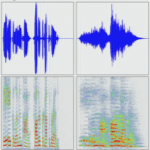
sound waves
Massachusetts Institute of Technology (MIT)
Instructor(s): 
Studies how the senses work and how physical stimuli are transformed into signals in the nervous system. Examines how the brain uses those signals to make inferences about the world, and uses illusions and demonstrations to gain insight into those inferences. Emphasizes audition and vision, with some discussion of touch, taste, and smell. Provides experience with psychophysical methods.

Pages

Subscribe to No